The Second Half and a Closing Passage

Apologies for those who have been waiting for our travel blogs. Sparse or no internet access has prevented us from posting them in the latter part of our trip. So, as it used to be, like waiting for a London bus, waiting ages for one and then them all arriving together, here follows the remainder of our blogs written on our German trip……
nuremberg nuremberg city

Thursday…..

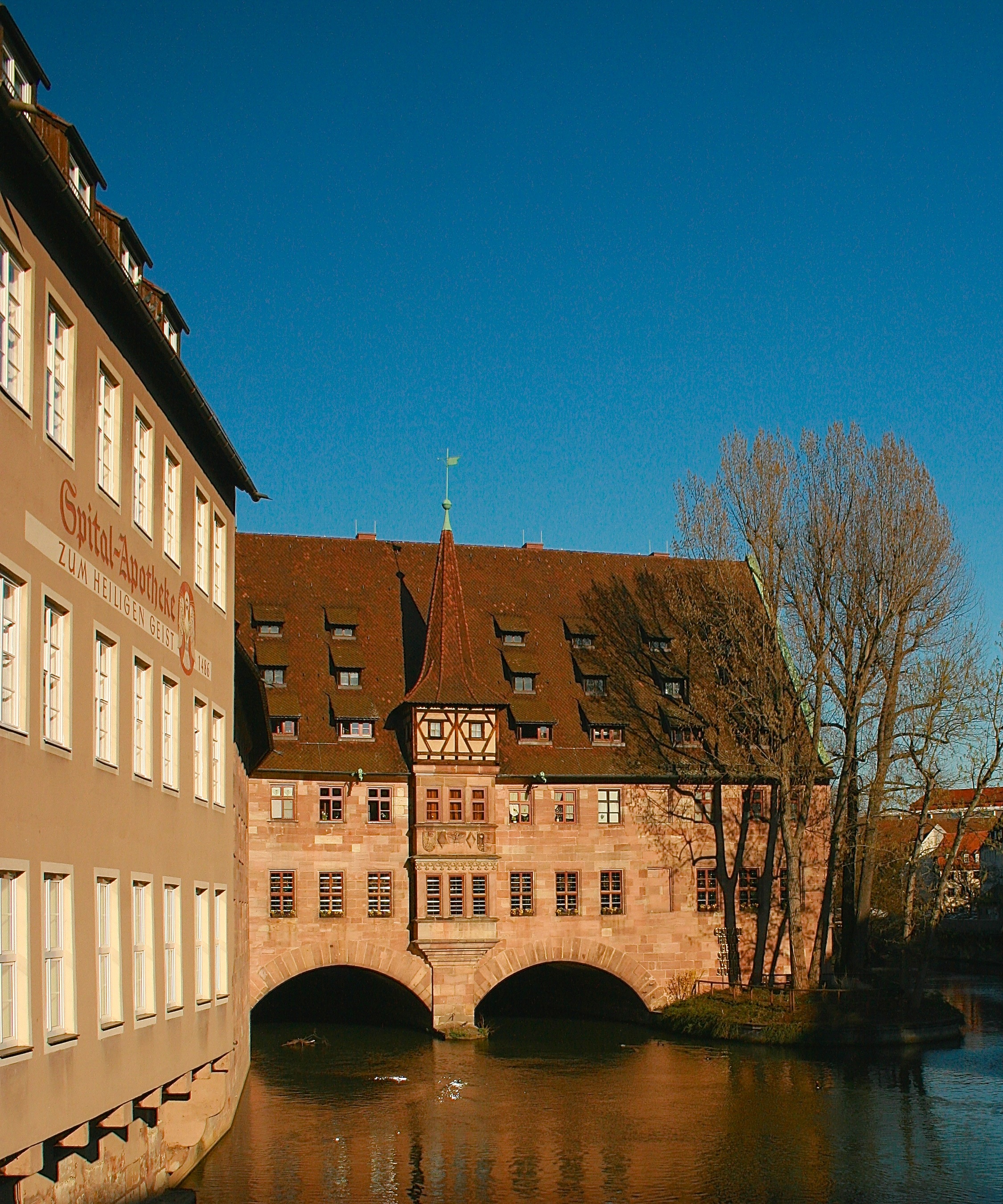
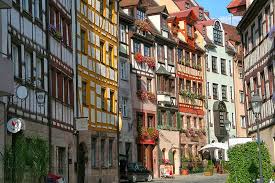
As we approach Nuremberg the city is synonymous in our minds with the concept of Post War Trials.  We were warmly welcomed in the classy Eckstein building, a Lutheran ‘base camp’ in the city centre providing a complex range of resources for the region’s churches and lovely hospitality through its café and restaurant, spilling out into the street just off the city square.  That evening one of the lecture rooms was filled with people who had come to hear Roy speak about the Sacred Spaces of monasticism and their relevance today.

eckstein

It was lovely to link up again with Christine Strohmeier, a child of Nuremberg, who has just completed the noviciate process and who is now living and working in London who was over visiting family with friends.

night   bar

The warmth of a summer evening allowed us to enjoy a walk through the lovely cobbled streets of this beautiful city and before returning to hosts and hotels we were able to sample good German beer in one of the many delightful inns. We were caused to think very deeply as all day in Nuremberg we met friendly, generous spirited people in shops, cafes, our hotel and on the street.  In 1945, 96% of Nuremberg was smashed to pieces by allied bombing. How many friendly, generous spirited people were also smashed to pieces in that year?  When you consider the cost of war on a smiling human by smiling human faces, war seems ludicrous beyond justification. It makes you think.

Throughout our wandering over many years now across Europe there are certain places where one feels some affinity and sense of connection and Nuremberg has such a feel. There is some thing very powerful and redemptive about being in a place that has known such violence, brutality and ugliness transformed into a place of beauty and welcoming friendliness.

ruins    IMG_5781

Friday ~ Sunday morning…..

Leaving temperatures in the mid 20C’s we travelled to Schwanberg,  a multi faceted retreat centre perched on top of a rocky hill which stands aloft in the middle of vineyard strewn, rolling hillsides. A gentle clutch of religious sisters maintain the centre and move amongst its visitors with humble efficiency. We were there as Roy was the keynote speaker at a symposium on Celtic Spirituality.  Other learned people led workshops and seminars on various aspects of the theme.

schwanberg  IMG_5837

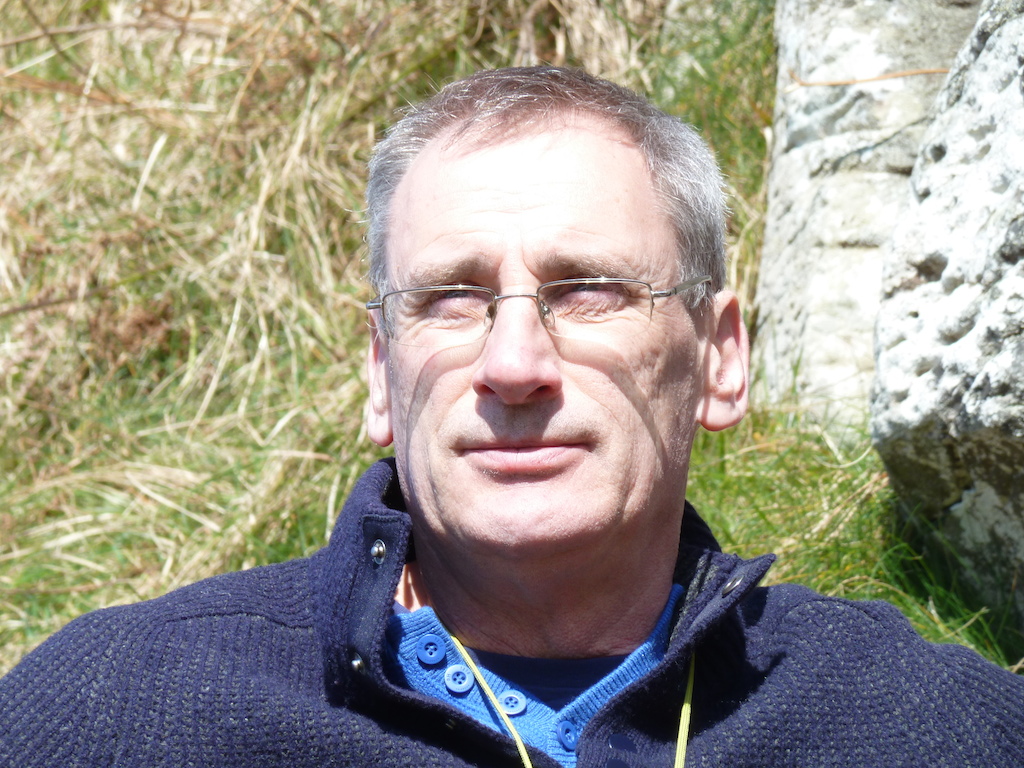
Again, because of our limitations with the language, we were unable to understand the range of motivations of participants who were there.  Some clearly see Schwanberg as their spiritual home, some were intrigued by a subject that was quite new to them.  There were those too, however, who are immersed in things ‘Celtic’ and in considering its contemporary applications several were already aware of and using Northumbria Community resources.  It was really good to meet up with familiar friends and friendly faces; Katrin and Daniel, Rainer and Ilona and to meet the two Peters from Switzerland, (a pastor and a businessman) and Peter and Martina, a theologian and pastor and his wife from Nuremberg. One senses that these people are key to the life and development of the Community in Germany, Switzerland and perhaps beyond, either as Companions or Friends.

Unknown

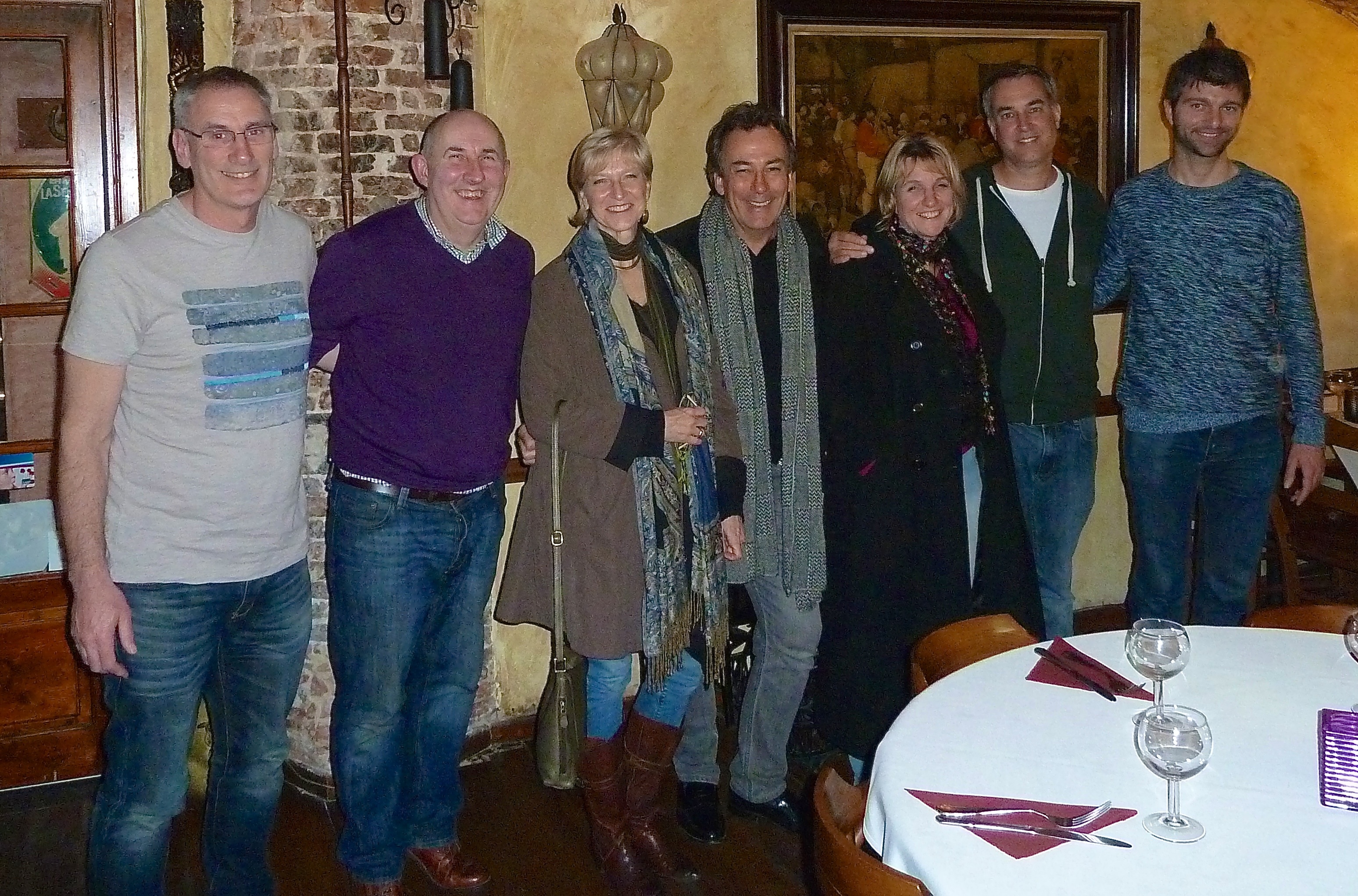
We shared wonderful and significant conversations with them.  It is clear that deepening friendship and co-operation will develop with these folk and their various callings and spheres of activity. It was good to meet up with Oliver again and Anya from Erlangen, again people with whom we feel there will be meaningful connections.

Over breakfast one morning the Lutheran theologian and director of studies at the convent intrigued Roy when he explained that his ancestral homeland was soundly Celtic and that just about all of the Celts in question had the surname of Searle.  This revelation will no doubt feature on some future itinerary when opportunity to return to Nuremberg and the area presents itself.

Our final session at Schwanberg saw us gathering for Eucharist with the sisters, the conference delegates, a large youth group and other day visitors. A Lutheran service, ordered yet warm and inclusive, rich in symbolism and enhanced by some great hymns, wonderful singing and aptly chosen instrumental music.  We barely understood a word of what was said or sung but somehow felt a real part of the proceedings, realising again that the experience of shared humanity and love transcends language, race, creed, colour and age.

Sunday afternoon and evening…..
IMG_5849

IMG_5863  P1050187

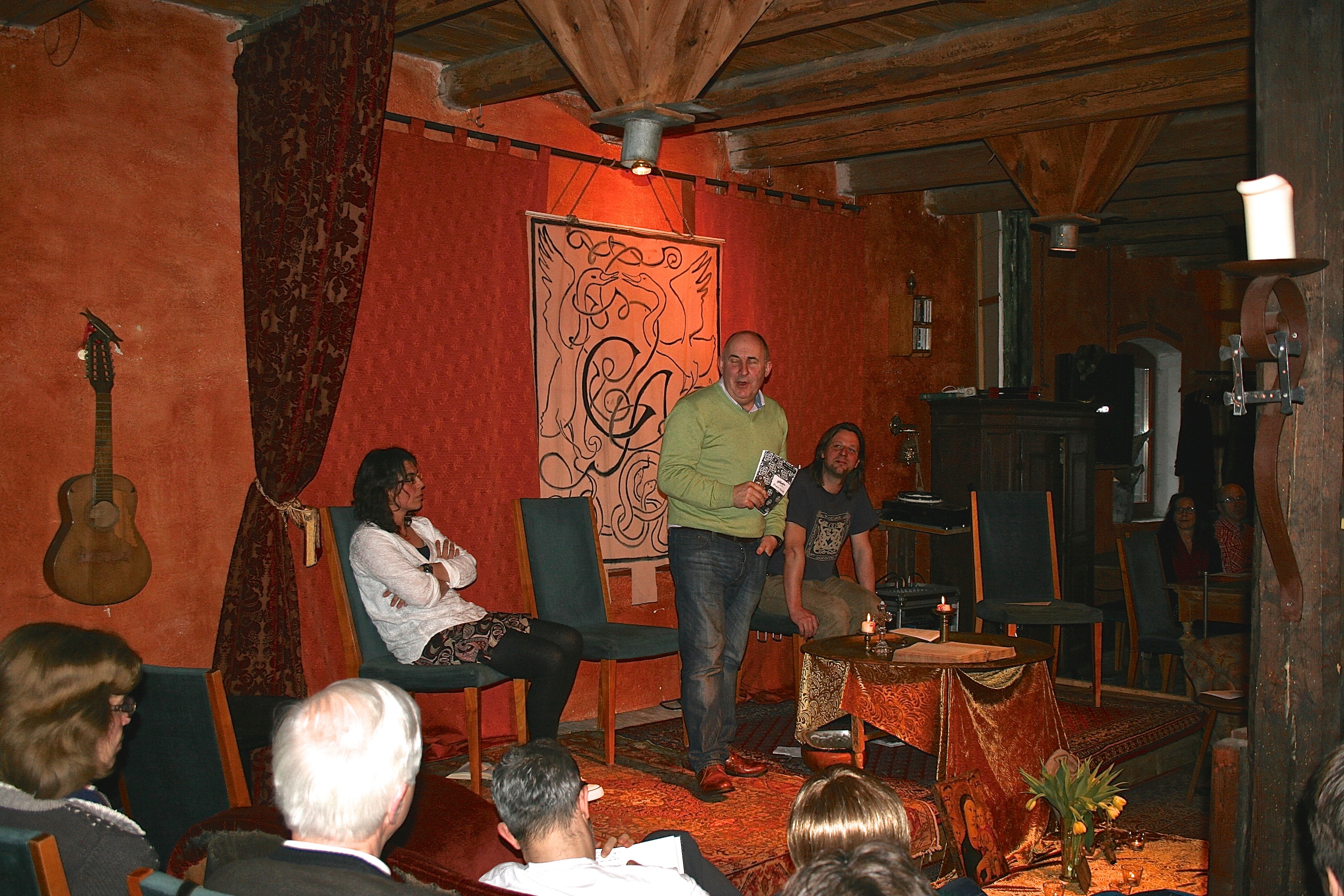
On Sunday afternoon we made the relatively short (2 hour) trip back to Gefrees. Roy addressed an afternoon gathering in Andy’s extraordinary barn on the subject of ‘God’s Generosity’, reflecting the nature of the Divine which calls for it being echoed in our lives.                                                                                                        Generous portions of wonderful German cakes were available afterwards and we soon prised away from them to explore Andy and Corinne’s new building venture, an extensive building and grounds which is a fraction of the cost that it would be in Britain.

One of the great things that travel affords is the opportunity to learn and listen to people of different cultures.  for example, our understanding of property prices was deepened this trip, only confirming how ridiculous and damaging our escalating and obsession with house prices and property is here in Britain. Bu contrast, in Germany, where many people rent affordable housing, which in the vast majority of the country sees property prices well within the ability of people to pay and not be crippled by huge mortgage loans and debts.  For example the house that we looked at whilst at Andy’s was a large detached 3 storey property with a very large barn and 2 other outbuildings set in 4 acres of land which cost £90,000.  It is by no means the most expensive area of Germany but the exciting development that Rainer and Ilona are pioneering in a lovely wooded valley near Limburg is costing 3 times more than Andy and Corinne’s place but includes 40 acres of land, including woodland, a small lake and a 28 room hotel! They are selling their house and will refurbish the hotel, creating it as a spirituality and retreat centre on which they will build a separate house and chapel and have outline planning permission for other houses to be built as people come to join them at Rivendale.                                                  Another shocking piece of news which is dominating debates in Germany at present is the scandalous and immoral situation that has seen Germany, albeit with very burdensome conditions, bailing out countries like Greece and Spain whilst Spanish and Greek millionaires and some billionaires have withdrawn their monies from their own countries and are investing in German companies, thus rendering their own countries bankrupt.  A report was published recently revealed that the average savings of the German population is 88,000 Euros in comparison to the small but wealthy Spanish and Greek residents in Germany who average over 112,000 Euros.  What crazy, damaging and arguably evil practices are allowed and indeed encouraged in an unregulated, free-market economy. As the late Tony Benn said quite aptly, “it is often asked why the poor are poor but we rarely ask, ‘why the rich are rich?’”.

Our site visit to the new building project over, we jumped in the car and dropping Anya off on our way, began our journey west, homeward bound. Five hours later, travelling at speeds that in Britain would require a calculator to count the number of points we accumulated and certainly would see the removal of our licences for some time, but in Germany is permissible and on some autobahns encouraged, we made our way to Limburg.  Warmly received not for the first time, by Rainer and Ilona, we enjoyed a good night’s sleep, conversation and healthy breakfast before our journey to the ferry port of Calais.

  • IMG_4576  2014-03-24 10.49.29

Monday…..

For many of our European trips, Germany has been a pleasant stop off point, usually en route to the IBTS Seminary in Prague.  It has been good to meet with people and encouraging to be able to serve in different contexts but this time there was a very real sense that something more solid and tangible was being formed with the people we met and the places we journeyed to, both in Belgium and Germany.  There is a very real sense that the Community’s life and work in Europe carries some importance.  Until returning in the autumn, as we make our way back across the English Channel, we say au revoir and auf wiedersehen.

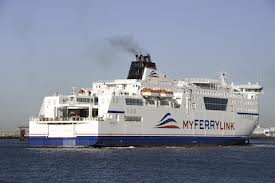
There are many advantages to travelling by car and boat rather than plane.  Reflecting is richer on uncomplicated roads and anecdotes can be elongated and enhanced.

IMG_5767    2014-03-24 15.51.27

The English Channel was caressed by sunshine and the white cliffs of Dover shone like a welcoming speech as we approached. Our immersion during the trip in areas consumed and affected by war meant that these cliffs should have had ‘blue birds over’ and were those left and returned to by so many boys and young men commissioned to kill and be killed.

IMG_4655   IMG_4672

In keeping with the Community’s paradoxical spirituality, embarking from the ferry at Dover we made our way to Canterbury, to its magnificent Cathedral and Abbey, home of Augustine and the Roman tradition.

The city precincts were awash with thousands of touring young people.  Arriving too late to pay nearly £10 each to do the tourist’s visit to the Cathedral, we resolved to return an hour later for Evensong.  The mark of the service was astoundingly quaffered singing by the Cathedral choir, high formality and well worked liturgy.  As the booming organ carried us to the exit, we pondered how every gathering of Christians, format, familiar or unfamiliar, liked or unliked, has the power to touch something of our lives with the transcendent, a reminder perhaps that as St. Augustine himself declared, our hearts are restless until they find their rest in thee, O’ Lord.

After travelling for most of the day and following many conversations, meetings and speaking engagements, to sit in the accompanied silence in the cathedral’s choir stalls and bathe in the beauty of the cathedral and the service of the choir was a precious gift.  Comfortable yet not really at home in this place that in many ways stands in contrast to the Celtic stream that we draw from and dwell in. Canterbury cathedral speaks of grandeur, beauty, Establishment, hierarchy, privilege, patronage and power.  Nevertheless, a magnificent place of worship. Perhaps the great tragedy of the Synod of Whitby was not so much that the king’s decision favoured Rome but that failed to recognise the gift and validity of both traditions.

Our lives this past week and in turn that of the Community have been blessed by the riches and diversity that have come to us from Lutheran, Catholic, Pentecostal, Cypriot, Benedictine, Baptist and Anglican traditions, each one adding meaningful threads to the tapestry of spirituality that is woven predominantly in our lives with Celtic and desert monastic strands.

A busy, demanding yet rewarding eight days. Deepening friendships and great travelling companionship, a spiritually enriching experience concluded in a very appropriate, down to earth way with a fish and chip supper with a mug of tea around the meal table back at John and Sue’s in Margate.

Early to bed, leisurely start to the new day and a returning home, rejoicing at the wonders he has shown us.

Thanks for journeying with us….
Posted in Uncategorized | Comments Off on The Second Half and a Closing Passage

Meals and Musings

Something you do more than usual in the course of travelling from host to host is receiving meals around a diversity of tables.  There does indeed seem to be something sacred in these sharings.  We have enjoyed the hospitality of those not in the Christian family as well as those who have inspired us with their vision of exchanging generous love with all encountered humans recognising their intrinsic value whatever their world view or economic status.

P1050180-2 IMG_4552

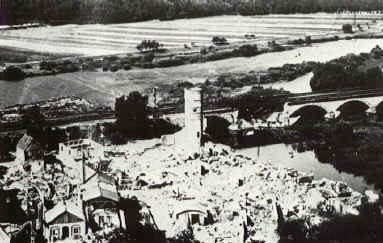
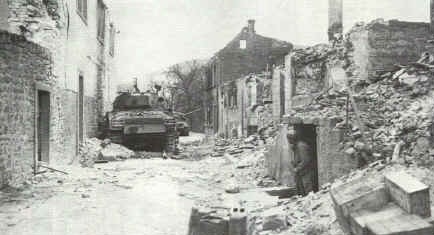
One doesn’t usually anticipate a drive of 330 miles, (the leg from the Ardennes to Bavaria) with too much enthusiasm but it was good craic and only warranted one or two car seat shuffles.  Do take note though that if you plan to buy lunch on the road, Germany closes at midday on Wednesdays.  We eventually found food in an anonymous but pretty little place called Gemunden.  It wasn’t anonymous in 1945 though for it was smashed to pieces during the allied advance.  There are pictures of American troops standing amongst hits rubble on displays in the streets.

Gemunden Gemeundenruins

Kleingemuenden

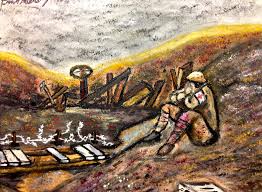
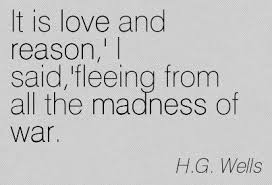
War is ugly for all sides and the horrors of ‘carpet bombing’ in Britain and throughout Germany give ample evidence of man’s inhumanity to man when licence to kill is given. It is hard to imagine now that the people we have met here and those who have served us in restaurants, petrol stations, shops and bars, each one affording us courtesy, friendly smiles, respect and cameraderie are part of a nation that in our parents lifetime was at war with one another and suffered on the killing fields and war torn landscapes of Europe. Every fibre in us strives for peace and reconciliation in a world still tearing itself apart with war. In a world where Britain alone has spent £37 billion (yes, that’s billion, not million!) on the war in Afghanistan. We can slash spending on health, welfare and education but find billions for war; madness!

painting  hg wells

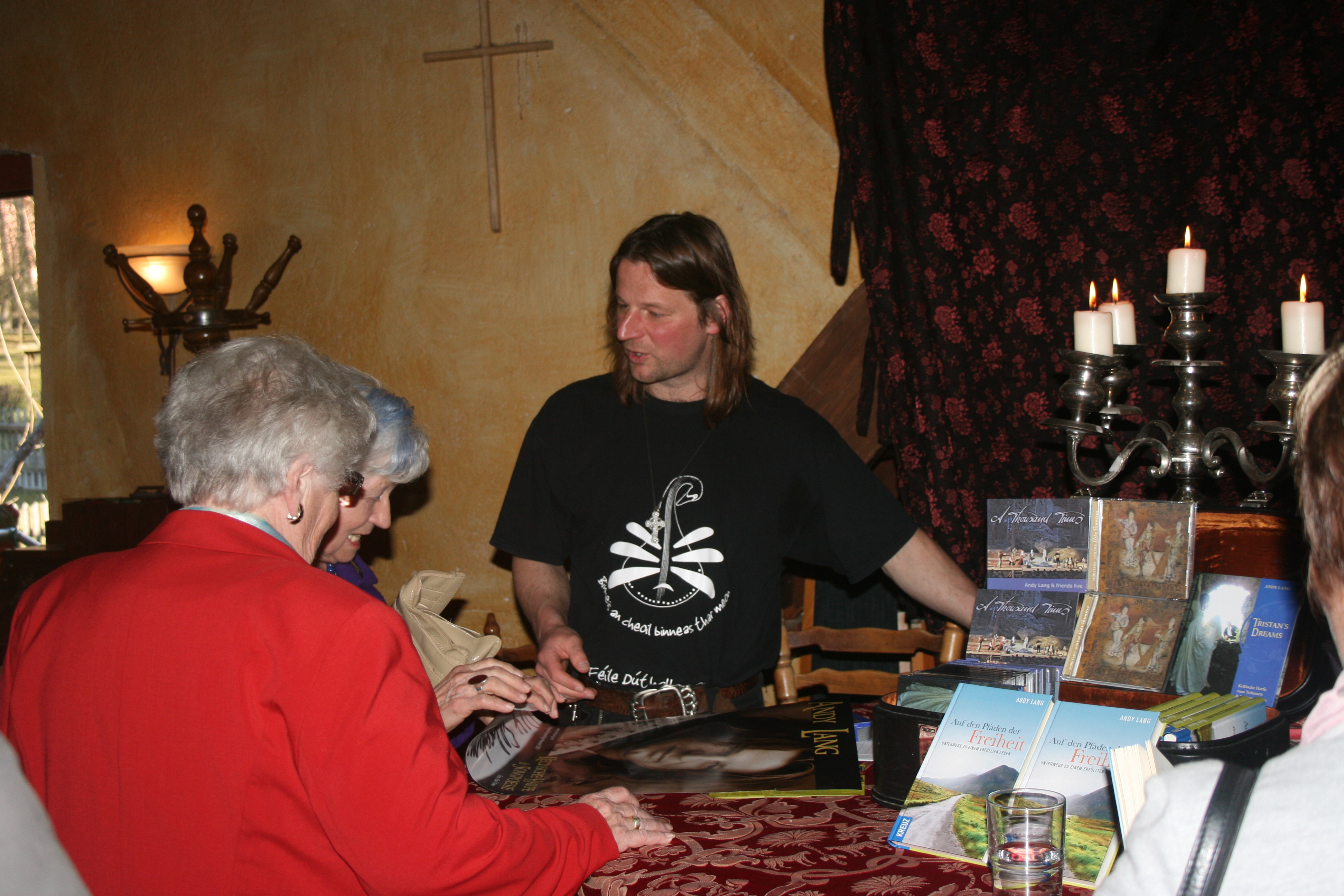
It wasn’t long after our arrival in familiar Gefrees that Roy was having his talk on ‘Vulnerability’, ably translated into German by Andy Lang, our host.  Translation meant that each of Roy’s jokes got two laughs which is probably why he finds it tolerable.  Germans are so good at knowing English, and vibrant (translated) conversation ensued after a break for spicy stew.

IMG_6240

Andy’s ‘Celtic’ music adventure continues to enthral sections of the local population and his fusion of mission and music continues to embed in the countryside around.

The venue which Andy and his wife Corinne maintain and develop has allowed for an annual touching point for people in the region with Roy and Northumbria.  What is it for which they reach which urges some of them to journey long distances (in one case 150 kilometres each way!) to make that connection?

What is it that draws so many German people to connect and explore Celtic Christianity? Perhaps there are clues to be found in our travelling as we move onto Nuremberg….

Posted in Uncategorized | Comments Off on Meals and Musings

Exceptions, Cafes and Meaningful Conversations


German Travel Blog


Ken Humphrey

Ken Humphrey


Roy Searle

Roy Searle


Ken Humphrey and Roy Searle usually make a trip on behalf of the Northumbria Community at this time of the year.  For the last nine years, since the establishing of the partnership with the IBTS Seminary in Prague, they’ve usually been part of a team that has gone to the CzechRepublic to lead the group, to teach or facilitate workshops.  This year, with the relocation of the seminary to Amsterdam, there is no Northumbrian Week in Prague.  However, they are outward bound to Germany via Belgium for a week of speaking engagements, meetings and no doubt some serendipity moments.  They are briefly going to sign in each day with a kind of ‘thought for the day’ as they journey.  Here’s an introduction to their trip.


Companions on the Road


Travelling anywhere holds challenges and opportunities and whenever you travel on behalf of the Community, it nearly always affords the opportunity of some adventure.  Journeying for the love of Christ is more of a pilgrimage than a route march.  The outward journey simply providing the context for the inward journey as travelling experiences, journeying to different places and meeting people are all used by God to effect the work of inner transformation.  Ken and Roy have known each other for many years and the opportunity to travel together is a privilege they look forward to and don’t take for granted.  Days will be spent sharing driving, conversation, meals, accommodation and work responsibilities.  Talk will be deep and meaningful, frivolous and peppered with much humour.  They will ponder together the mystery and paradoxes of faith, agonise over the complexities they recognise in their own lives and the world in which we live.  They will debate politics and wonder where the voice of socialism might be heard again in the land, they will sort out everybody else’s problems at local, national and international level and might find the time to proffer a few suggestions for their own.  Two companions, deeply covenanted friends, who’ve laughed and cried together, prayed and served together, the sharing of hearts and minds deeply embedding a profound sense of companionship.  They will abstain from tea and coffee as a Lenten discipline but partake of good Belgium and German beer and, in order to enter into the cultures in which they will be staying, they will leave the land of pre-packaged foods and takeaways and taste local delicacies.  They will make poor attempts to speak French and German, trigger much merriment and hopefully through their time together carry something of the Community’s story in their hearts and lives in such a way as to bring hope and encouragement to those who they meet; friend and stranger.  We pray that their apostolic and prophetic callings will create and provoke inspiration, illumination and insight.  They will meet with believers and unbelievers and talk with Companions, Friends, hosts, waiters and shop assistants.  They will “look for Christ in a stranger’s guise” and pray that he may be in the heart of each to whom they speak.  They will observe, reflect together what they see and hear, feel and experience as they journey.  They will guard one another’s hearts, watch each other’s backs.  Today, St. Patrick’s Day, they will remember the influence not only of the man whom God called away from his homeland to live in Ireland to become its ground breaker and pioneer for the kingdom of God, but also with thanksgiving recall the impact of the Irish Saints upon Europe.  As they walk, (or travel in a Skoda Yeti) across the ancient paths through France, Belgium and Germany, we pray that God will guide, direct and protect them and bring them home rejoicing at the wonders he has shown them.

ferry

Church: Relevant or Irrelevant?

listen

I suppose we get most of our understanding on the condition of the church in England from big picture media.  By radio, newspaper and television we are informed that the church is eccentric, off message with culture and essentially irrelevant.  One can accept the insinuation that the church has had its day.  Last night though we sat around the table of John and Sue Richardson, John is a vicar in Margate.  They spoke of 172 volunteers and 25 staff at the church, many of whom are providing welcoming and helpful spaces and service for damaged, broken and struggling people from the nearby disadvantaged housing estate.  Compassion and creativity appear to be at the core of this provision.                                                                            Is the church marginalised from national infrastructure but locally vibrant, or is Trinity Margate exceptional?

Café Le Roy

Robin & Roy

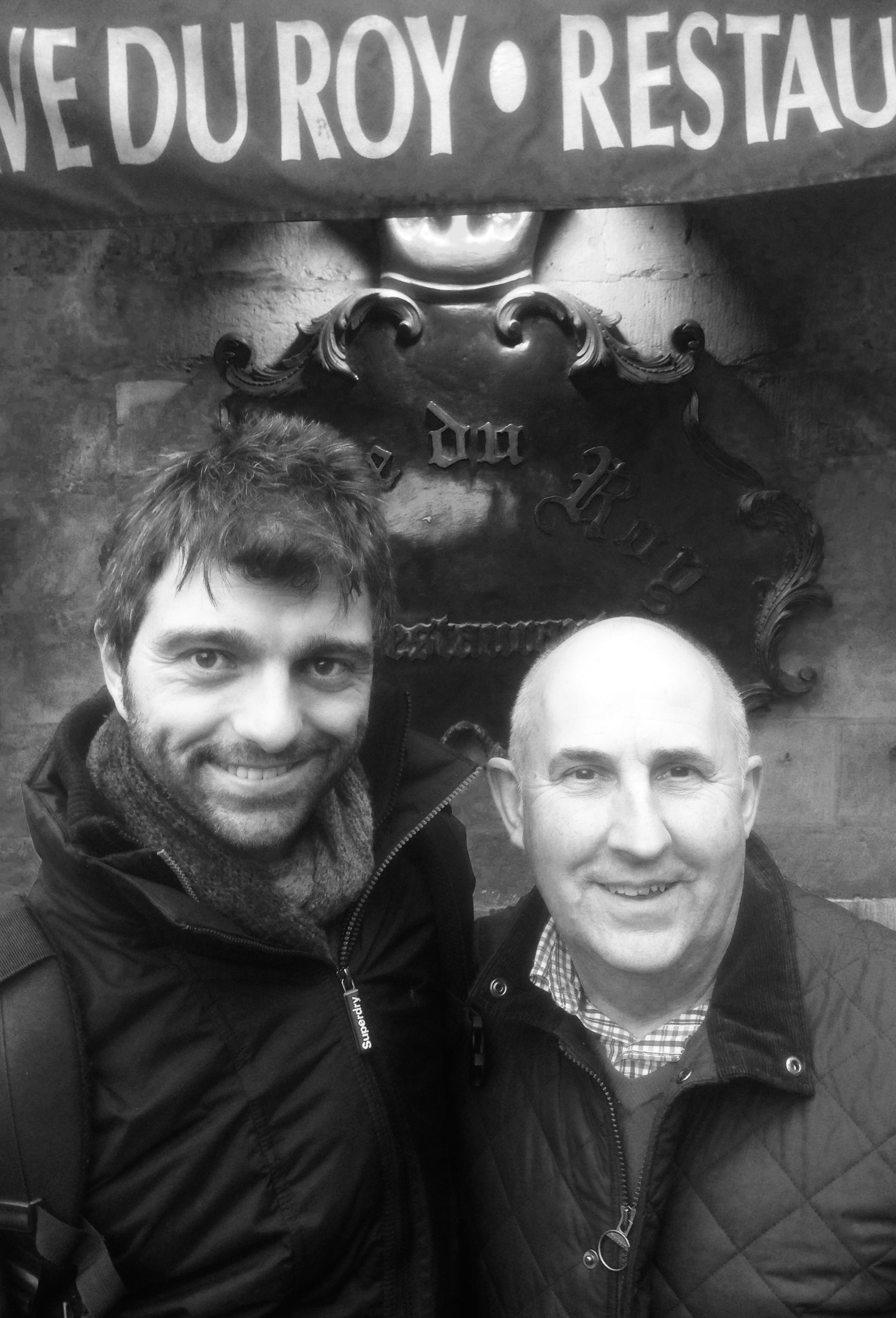
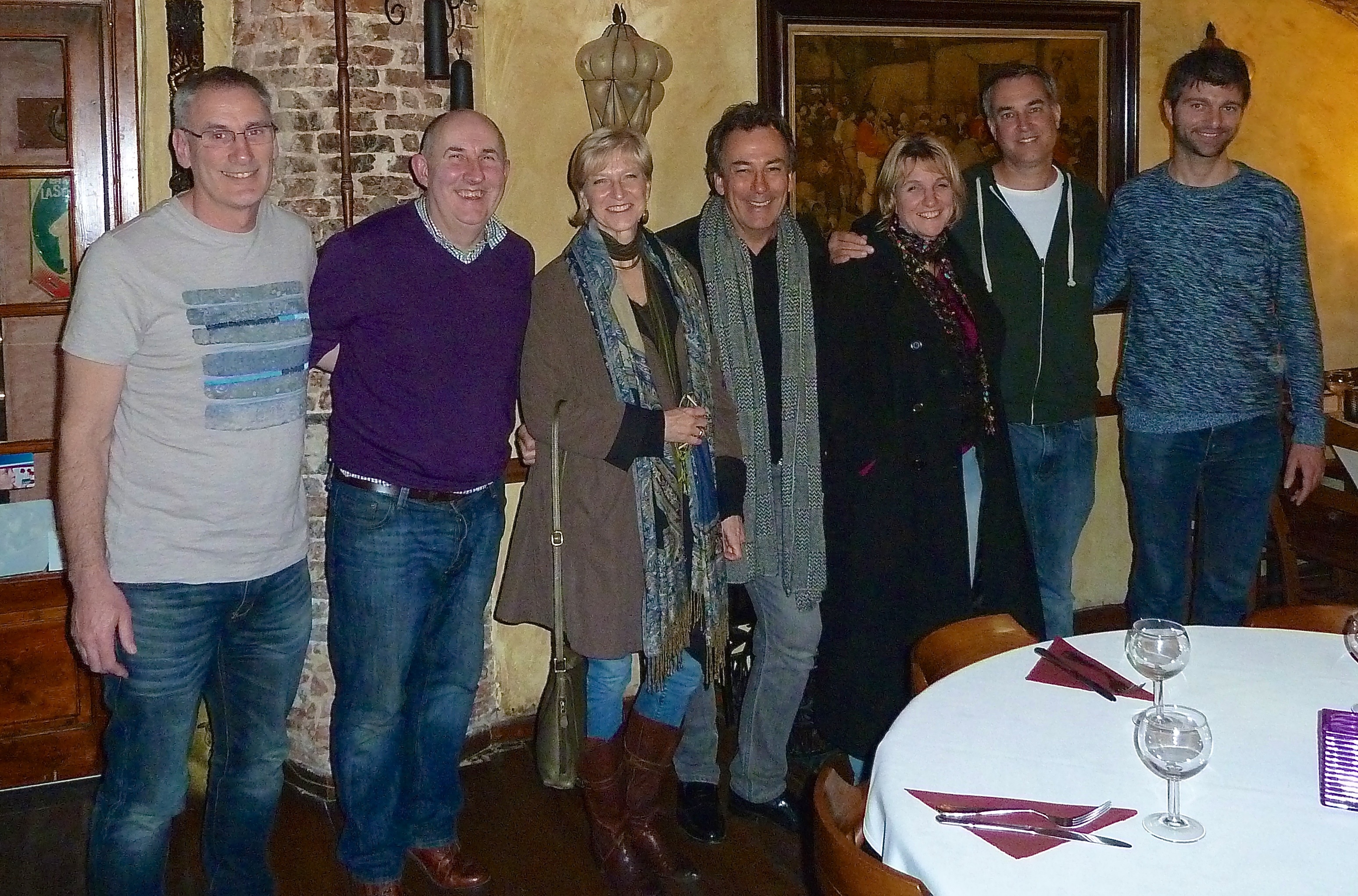
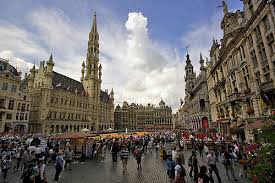
We met the delightful Robin for lunch in La Grande Place, Brussels.  In Café Le Roy(!) we listened to him tell of the twisted weave of his cultural and religious background and of the many featured paths of his attempt to follow the way of Jesus.  A Greek Cypriot, he has committed himself to sacrificial youthwork, mission and reconciling in Britain, Spain and now Belgium.  We were joined by Carlton and Shannon who work alongside him in Serve The City which pours love upon the homeless and street dwellers of Brussels and many other cities throughout the world and with their friends, Jay and Terry, the ensuring conversation threw up a tapestry of shared values and people known in common.  Strange but not a surprise that Northumbria’s resources were already part of the lives of some who we were meeting for the first time.

Brussels Group

Jay portrayed the Community as a mountain providing a refuge of reflection and support for people who may not even be able to get to the mountain but knowing it was there was a great source of strength and inspiration.  The invitation to Northumbria to have a role in the life of the worshipping community here in Brussels, at the heart of Europe was offered.  Our lunch was secretly paid for, and we went out into the chilly grandier of La Grande Place with newly found kindred spirits.

brussels

Posted in Uncategorized | Comments Off on Exceptions, Cafes and Meaningful Conversations

The Horrors of War and the Need of Peacemakers

Earlier this year, Shirley and I went to see the film ‘The Railway Man’.  The harrowing tale of a British Army officer who is tortured and tormented as a Prisoner of War at a Japanese labour camp during the Second World War.  Eric Lomax’s life remains tormented as a result of what he had experienced and witnessed until decades later, he discovers that the Japanese interpreter he holds responsible for much of his treatment is still alive and sets out to confront him and his own past.  It is a very disturbing true story that reminds us of the evil that is war and the tragic, damaging consequences for all those who are caught up in conflict and violence.

Cinemas in North Northumberland and the Scottish Borders were filled to capacity not only because Eric Lomax was a Berwick-Upon-Tweed man, or that much of the film was shot on location in the area, but because many people from this area fought or were Prisoners of War in Japan during World War II.  I was speaking to someone in my home village who was telling me that some men from Wooler had arrived by boat onto a Japanese island, armed and ready to fight, totally unaware that the British had surrendered and immediately were taken into Prisoner of War camps, several of whom never returned and others, like the vast majority who experienced such horrors, were never able to tell of their hellish experiences and have remained, like Eric Lomax, damaged, many beyond psychological repair.  Perhaps the most haunting scenes in the film were those of the waterboarding torture scenes in which water is poured by hosepipe into the mouth and nose, causing the individual to experience the sensation of drowning.  It damages the lungs and brain with oxygen deprivation and produces lasting psychological damage and in many cases death.  Barbaric treatment, cruelty on an horrific scale that one would hope had vanquished at the end of the war.  Sadly, not so for such practices are used today by so called civilized, enlightened nations.  Unequivocal video evidence and reliable testimonies have indicted American forces using such methods of torture in Iraq and, unpalatable though it is, British armed forces are not immune to such charges and inquests and military tribunals will bring shame upon the British Army when further revelations and truths are revealed.

I believe that war is alien to the purposes of God.  It was never in God’s plan. It is a consequence of sin, rebellion against God and his ways.  Acts of violence be they physical, mental, psychological, emotional or even spiritual are wrong in the sight of God and so damaging to humanity and the world in which we live. Jesus, Saviour of the world is the Prince of Peace. In his Sermon on the Mount, that foundational, revolutionary manifesto for living, Jesus speaks about the meek inheriting the earth… that the merciful are blessed as are the peacemakers.  It becomes increasingly more an imperative for me to see that being a follower of Christ means being a peacemaker and reconciler.  Conflict and violence, hatred and warfare either in the heart, home, community, nation or world bears all the characteristics of what Jesus came to confront and combat, “the Prince of this world, Satan, darkness and evil”.                                                                                                                  The good news of the kingdom is liberation from such evils as torture, violence and war.

With a General Election due next year, politicians have begun the process of electioneering.  No doubt the election will be based upon economics.  Bill Clinton’s successful 1992 presidential campaign used the phrase, “it’s the economy, stupid”, which was used to great effect in defeating George Bush Senior during a time of economic recession.  What will sadly not figure greatly in any political debate is that of who will promote peace, work for justice in the world, act mercifully toward others and initiate programmes that resolve conflict and violence at local, national and international levels.

Once a supporter of Tony Blair, I could have wept seeing him sitting as an honoured guest at the funeral of the former Israeli President Ariel Sharon.  He was there as the former UK Prime Minister and Middle East Envoy.  How ironic that somebody who undoubtedly was used in bringing about the Good Friday Agreement in Northern Ireland in 1998, is now the subject of calls for him and George W. Bush to be sent to the International War Crimes Tribunal in The Hague.

With the present crisis in Ukraine and calls for action to be taken against President Putin, I fear that all moral legitimacy has been removed from the UN after Britain and the US went into Iraq. What right have we to condemn Putin, (whose policies I abhor) when we invaded a foreign country on very dubious grounds and trumped up and unsubstantiated allegations? We have lost the moral high ground.

News headlines carry reports of British soldiers killed in Iraq and Afghanistan but rarely report the fact that over 1 million people, the vast majority, innocent men, women and children who have died since we invaded those countries, far more than ever suffered under the hands of Saddam Hussein.  Billions of pounds have been spent on armaments in such wars, the consequences of which, I would contend, have made the world a considerably less stable place and the Middle East remains a cauldron of simmering conflicts and violence that holds the potential trigger for a nuclear war.

We have modelled a way of warfare where what is perceived to be wrong is met with military might but such thinking is medieval, mistaken and a million miles removed from the ways of God.

When Tony Blair became Prime Minister in 1997, one of his catchphrases was “tough on crime, tough on the causes of crime”.  Good phrase, good policy.  Shame he didn’t embrace similar thinking when it came to foreign policy, “tough on terrorism, tough on the causes of terrorism”, instead of spending billions of pounds on armament and breeding conflict and hostility and inciting religious hatred and violence, we might have best spent time and money on tackling issues of poverty, injustice, reconciliation and peace.

The idea that you can just go in and kill the baddies or as America sought to do in Afghanistan, carpet bomb the land, is not only futile but arguably perpetuates further violence.  What the world needs is a revolution that breeds non-violence, cultivates peace and reconciliation.  A world where billions are spent on peacekeeping issues, together with feeding the poor, clothing the naked, sheltering the homeless, welcoming the stranger, living justly, expressing compassion, in other words bringing the kingdom of God to bear, here on earth as it is in heaven.

Last year we were involved as a Community in a Peace and Reconciliation pilgrimage as part of the Battle of Flodden 500 Commemoration.  This year is the Commemoration of another gruesome battle that scarred the two nations, Scotland and England and I hope that again we might be involved in some way of advocating peace and reconciliation.

Of equal significance this year is the 100 years commemoration of the First World War.  Thank God that the Prime Minister and one of the Secretaries for State have heeded the correction by members within their own party and are no longer using the occasion to celebrate but to commemorate.  There is nothing to celebrate about war.  True, there are stories of sacrifice and heroism that can be heralded as virtuous, but war itself should never be celebrated.

Last week I listened to a fascinating interview on the radio with a paraplegic, a soldier who had lost both legs and an arm, the casualty of a land mine in Afghanistan.  He was critical of the heralding of those who’ve gone on to great sporting achievement at things like the Paralympics.  Not wanting in anyway to denigrate their achievements, he reminded us in his interview that the vast majority of war victims are not success stories.  They not only carry physical disability for the rest of their lives and all that that entails across every spectrum of life but they are psychologically scarred to the end of their days.  Most battle with depression, the suicide rate amongst war victims is incredibly high and whilst many will stand proudly at war memorials on Remembrance Sundays, there are others whose lives are ruined by what they’ve seen or been involved with.

I feel an unease about any championing of the Help the Heroes cause.  I long for the day when we might stop recruiting people to kill.  We even use the term military personnel, people in the services, somehow to deflect from what we train these people to do.  Yes, it will be argued, in order to defend, but we train people to kill with conventional armaments or nuclear and chemical weapons.

I guess I naively long for the day when we might be celebrating heroes of peace and reconciliation.  Where are the likes of Martin Luther King, Desmond Tutu, Mother Teresa of Calcutta, Nelson Mandela, Mikhail Gorbachev, An San Suu Kyi, Mahatma Gandhi today? Of course, non violence and peacemaking is no easy task. Jesus, the great hero of peace and reconciliation ended up being tortured and killed but through his act of non violence, through his redeeming love, forgiving grace and ever-lasting mercy, has brought the prospect of salvation to the world.

Surely as disciples of Christ, as a Christian Community committed to a way of life of Availability and Vulnerability we are called to be peacemakers, agents of reconciliation, bearers of a different way of living, of reconciling conflict, of celebrating diversity and living at peace with our neighbour, our fellow citizens of the world.

peace

Posted in Uncategorized | 3 Comments

Memories and the Miners Strike

I am always fascinated by how certain things trigger memories.  Like a piece of music, a photograph, smell, atmosphere, piece of drama or something that you hear on the radio. 

The sight of Spring flowers and birds singing in the hedgerows triggers memories for me of childhood days and walks in the countryside with my parents, along with other memories of shedding the winter coat and walking up Castle Terrace in Berwick upon Tweed as a young married couple up to Bible college.  Pleasant, happy memories.

miners strike

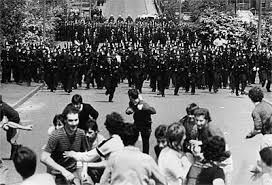
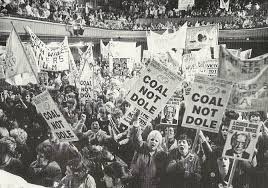
This week’s trigger point brought back very contrasting memories.  It’s thirty years since the miners strike, a historic event that marked the decline and virtual closure of the coal pits throughout Britain.  Leaving whole communities devastated; many of whom that have never recovered and who bear to this day the scars of policies that dismantled union power, workers rights and, with over half of Government investment going into London and the South East, signalled the decline not only of major industrial bases with ship yards, factories, engineering plants and steel works closing in the Midlands and the North of England but hundreds and thousands of people who lived there.

There is no doubt that those communities were not always well represented by their leaders but I remember the miners strike and that period that witnessed some savage economic and political measures which destroyed many of the North East communities that I knew.  Where we were living on Teesside, we saw unemployment, a troubling and challenging 18%, rise within 4 years to over 50%.  Skilled and semi-skilled workers, hard working people who didn’t earn a great deal but who lived sufficiently, supporting their families and with a great sense of neighbourhood and community, if losing their jobs, thousands of them. Knowing of families where mothers cried themselves to sleep because they were unable to feed their children that night.  Men salvaging coal dust on the beaches, others spending their days scrounging or pinching wood and anything else that would burn to give some warmth and heat to their homes. For a sense of what communities were like and the impact of the strike upon them it’s worth watching ‘Brassed Off’ the great film that touched so many who saw it when it was released back in the 90’s.

coal not dole

This week if I was teaching at Cranmer Hall, Durham and I was talking to students about leadership and we were discussing how vocation evolves and develops and how often events or experiences deepen a person’s consciousness and sense of calling. We looked at the Biblical example of Moses, who was moved by the plight of his people the Israelites, suffering at the hands of the Egyptians.  I’m pretty sure that was a factor that God used in his calling Moses to be the liberator and leader that he became.

If For me, witnessing the injustice, poverty and suffering of people in the North East in the 1980’s, certainly influenced my decision to engage more with politics and to see that the gospel had social, political and economic implications for society, how we live, work and treat our fellow human beings.

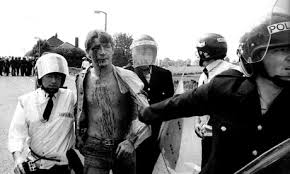
Grim days that witnessed some atrocious behaviour from both sides of the dispute and the insidious and evil cover-up by the police authorities.  One wonders what other things will come to light as people continue to call for a public enquiry into the dispute or ‘Battle of Orgreave’ as it was called, the bloody and violent confrontation between police and picketing miners at the British Steel coking plant in South Yorkshire in 1984.

blood

In 1991, South Yorkshire police were forced to pay out half a million pounds to 39 miners who were arrested at Orgreave. Michael Mansfield QC described the evidence given by the police as “the biggest frame up ever”. He said that the force had a culture of fabricating evidence, which was not corrected by the time of the Hillsborough disaster.

Dark days, salutary times, that seem so distant in the memory until you drive through those once proud communities, now desolate or so run down and depressed that in their hopelessness the only prospect, for so many, particularly young people, of something positive, comes from drink and drugs that are now rife on neglected former mining communities.

run down

Posted in Uncategorized | Comments Off on Memories and the Miners Strike

Lenten Thoughts

News headlines might grab our momentary attention but very few sink deep into the consciousness or bring about any lasting change. The dumbing down of news reporting is governed so much by keeping the audience watching, which renders news more as entertaining than engaging. The desire to get an exclusive, to capture the moment, a photo opportunity and not engage or be moved by what is being reported, renders us losing something of our humanity.

kevin-carter-vulture

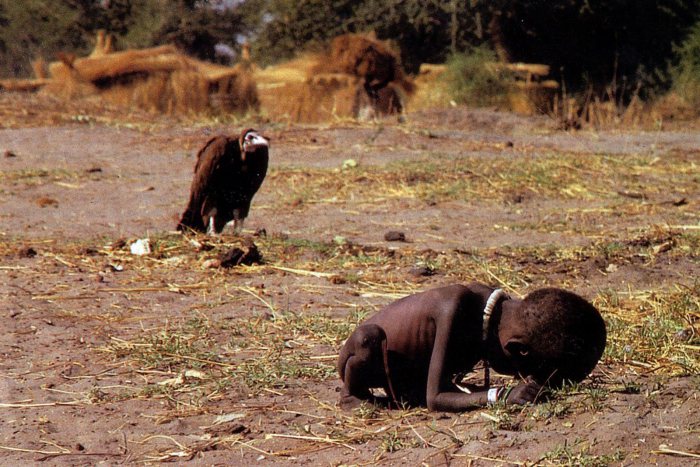
There is the salutary story of the journalist Kevin Carter who was a war correspondent during the Biafran war in 1993. He took the now iconic photo of a vulture preying upon a dying Sudanese child. The image is very powerful and it appeared in the New York Times and Carter went on to win the Pulitzer Prize for his photo but he took no joy in receiving such an accolade. He reflected on the twenty minutes he spent adjusting his lens to take just the right frame of her suffering, one predator, a bird of prey with another, armed with a camera. He was adhering to the guidelines laid down for journalists in the Sudan who were told not to touch famine victims because of the risk of transmitting disease. He lived for a few years after that incident consumed with the violence he had witnessed and haunted by the questions as to the little girl’s fate and the regret he carried for not intervening, he committed suicide. When getting a photograph, capturing an exclusive, keeping the audience ratings high are more important than responding to human need, we are in grave danger of losing one of the most basic components for human life in society, compassion.

lent

We have just entered the season of Lent, a period that affords us the opportunity to reflect. For a number of years now I have embraced some of the Lenten disciplines, giving up some things, fasting from others and being more intentional about some areas of my life. Among the things that I intend to cultivate in this season that leads up to and prepares us to celebrate Easter is to take some aspect of the news seriously and to pray about the people, issues and situation that I’m hearing on the radio, seeing on the television screens or very occasionally, reading in the newspaper. There is a sense in which we suffer from “information overload” in our contemporary culture, being bombarded from all forms of media with information about so many things. So just as the monastic calling reminds us, to will one thing, ie. to seek and to love God above all else, I am taking that focus on the one thing, to pray about some news story. Prayer and intercession is an invitation to enter into an adventure that engages us in holding before God people and situations, some of whom we have no direct relationship with.

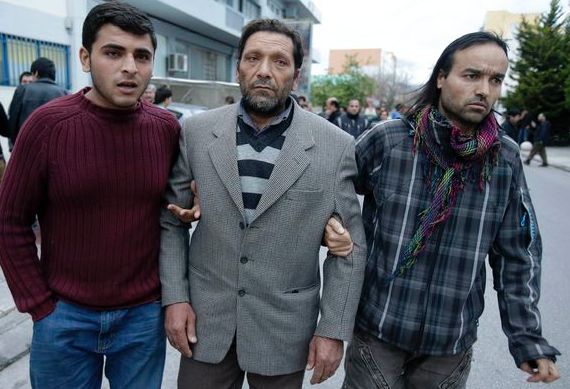
Let me illustrate; I read the other day about an Afghan man who lost his family when their boat sank. Fleeing with other Afghan and Syrian migrants, their vessel, with its engine failing, was spotted by some Greek coastguards. Sensing that help and a harbour of safety and a place of refuge was in sight, their hopes were quickly dashed. Their only words, they cried out to the coastguards, “help, please help, help”. They threw the rope to the coastguards vessel but instead of being towed into safety they were taken at great speed back out to sea. With guns firing overhead, the coastguards made it clear that the migrants must return to Turkey, from where it was believed they’d come from. They towed the migrants boat so fast that it began to take in water, the fragile vessel being hurled across the sea by the speed and wake of the coastguards vessel. The cries of migrants on board, desperately trying to both bail out the water that was threatening their vessel and to appeal to the coastguards who wielded threats and guns was to no avail. Even when they held the babies and children above their heads and pointed to the women on board, the callous disregard of the Greek coastguards showed no compassion. Eventually the rope snapped but the damage to the migrants boat when they were taking in water was overwhelming the vessel at an alarming rate. They had been taken out of Greek waters, abandoned and within the next 10 minutes the vessel capsized. A dozen people are believed to have died, eight were under the age of 12.

Such callous brutality in the Aegean Sea caused a momentary outcry, a day’s newspaper headlines in a few European newspapers but the story has left a deep and lasting residue in my mind and I have spent several occasions since, praying and being mindful of the Afghan migrant who has lost his wife and children. Living with the nightmare that has besieged his country, escaping at great cost and risk to himself and his family, he turns to the West, believing that there is hope on the horizon, the opportunity of a new beginning. His dream of heaven became a living hell and today a broken man languishes within a Greek detention centre. Seated in the centre he spoke to a reporter, shaking his head in disbelief. At 39, he has lost everything. “Nothing makes sense,” he sobbed. “All I had wanted to do was get to Europe. Now we don’t want anything: asylum, protection, bread, a home. All we want now is the bodies of those we love”. You might wish to remember in your prayers Fadi Mohamed.

fadi

If that is how Greece, addresses the problem of immigration, then I question every penny that the rest of Europe has spent in bailing out a country that for a number of reasons, including greed, injustice, corruption, financial mismanagement and poor government got itself into so much debt.

Immigration is clearly an issue but it cannot be tackled simply by protectionism. We are world citizens and we need to be asking questions about the causes that lead people to migrate. There are issues of justice, poverty, exploitation, the abuse of power, violence and war that lie behind the issue of immigration. Famine, war, violation of human rights, suffering and oppression are common features that lead people to leave their homelands. Failure to recognise these facts and to only be concerned with one’s own well-being is not only foolish but, to be clear about what the Bible says, such an attitude is sinful in the sight of God. When issues of immigration are fuelled by racism it is time for all those who follow Christ to speak out. Make no mistake, the media’s sympathy and distorted headlines and suppression of the truth, highlighting only those minority cases which support and fuels racist attitudes, are a greater threat to society than any immigration issue. Are we so lacking in an understanding of history that we forgotten what evils were unleashed upon the world in the last century when nationalism was allowed to raise its ugly head. The Holocaust was more than a Jewish event. Millions of people were exterminated; migrants, Czechs, Greeks, Gypsies, Russians, Serbs, Socialists, Poles, and Ukrainians, along with homosexuals, mentally and physically handicapped people, trade unionists, prisoners of war of many nations, and still others whose identity may never be recognized.

racism

Racism is deadly, it is a cancer that invades the human spirit and destroys relationships as God intends. Racism and its inherent hatred of foreigners was probably what motivated those Greek coastguards. Their racist, callous actions showed them treating other human beings as less than human. Once you do that, you are one step removed genocide and ethnic cleansing.

Jesus’ strongest words of condemnation were spoken to those who neglected the poor, who didn’t feed the hungry, clothe the naked, give water to those who are thirsty, shelter those who are homeless and welcome the refugee.

think

Stark but important things to think about during Lent.

Posted in Uncategorized | 5 Comments

Birthday Blessings

Well very unusually for me, but like last year, I am away from home and family on my birthday. Last February I was in Belgium for our Community’s European Gathering and enjoyed a lovely weekend in Spa before driving on through Germany to the Czech Republic, where I spent some time writing and teaching at IBTS in Prague.

I did see Shirley for a couple of hours yesterday as I dropped her off in Scarborough where she is spending the weekend with her mum and two sisters.

I woke early, listened to the farming programme, (that’s early!) opened my birthday cards and did a couple of hours writing before going up to the main house here at St Oswald’s to check e-mails.After a wild and stormy night, nothing in comparison to that experienced in the south of England but nevertheless enough to rattle the windows, the weather looked as though it was improving as I looked out of the window late morning and so I made my preparations to go for a walk.

Being alone on your birthday affords lots of time for reflection and I thought it would be appropriate to go for a beach walk, as someone who was born near to the sea at Whitley Bay, 57 years ago today.

Well my optimism was misplaced and within twenty minutes of being on the beach, contrary to the forecast, it started to pour with rain and rather than plough on, I turned back and retreated to a seaside café where I enjoyed a comforting hot chocolate and spent some time looking out on the increasingly grey and bleak seascape. Not anticipating a turn in the weather I had not bought a paper so was left to simply sit and ponder and I started to think about things that I was thankful for and very easily within the next half an hour jotted a whole host of things down, which I have subsequently added to over a cuppa back at the cottage I am staying in.

So, for anybody who is interested and in no particular order of priority apart from the first few;

57 things that I am thankful for on my 57th birthday:

1   My faith in God, or rather his love for me

2  My wonderful wife

3  My children

4  My grandchildren

5  My daughter in-laws and son-in-law

6  My parents

7  Our wider family

8  My two close soul friends

9  Some really good friends, near and far across the world

10 Great colleagues and a significant number of valued Companions in Community

11 A happy and secure childhood, (Good Attachment Theory)

12  Never being rich or financially secure but never being without a good home, food to eat and an appreciation that riches do not lie in material possessions or bought experiences

13  Being born a Geordie and living in the North

14  Enjoying good health

15  Being able to still play sport

16  The ability to walk and climb up hills without being out of breath

17  A lifestyle that affords me considerable freedom amidst many responsibilities

18  A Rule of life, Availability and Vulnerability, by which to live by; informing, inspiring, challenging and life-giving.

19  Being creative and resourceful

20 Essentially living simply amidst the complexities of life and work

21  Enjoying the new season of writing and resourcing

22  Opportunities to lead and teach

23  Seeing the Community grow and develop

24  The pleasure I still find in driving

25  A sense of humour

26  The ability and time to pray and think deeply about things

27  Being intuitive

28  Emerging links and friendships across Europe

29  The sea and opportunities to sail

30  Feeling secure

31   A real sense of vocation; monastic and missional

32  The countryside and Top Farm, Norfolk and all its happy associations

33   Opportunity to input and serve the Baptist Union and other leaders

34   A lovely spiritual director and some great prayer supporters

35  Formational Bible College training

36  Some godly examples and mentors, past and present

37  A good PA

38  Being a Non conformist (Baptist)

39   Appreciating life in all its rich diversity and fullness

40  Chai Latte

41  Opportunities to make a difference for people, places and situations

42 Meeting interesting people from all walks of life

43 Owning a dog

44 Pottering in the garden and doing DIY jobs

45 The ability to relax easily

46 Coming up with ideas and designing things

47  The radio

48  The Guardian

49  Peter Kay, the comedian

50  Being a Boro supporter

51   The Archers

52   Holidays

53   Kozel (Czech) beer

54  Energy

55  Portrack Baptist Church and their calling Linda to be one of their pastors

56  Good sleep

57  Texts, calls and emails from folks wishing me Happy Birthday, including my grandchildren talking and singing to me over the mobile phone.

Birthdays are important. I often share with people these words from Henri Nouwen:

Birthdays need to be celebrated.  I think it is more important to celebrate a birthday than a successful exam, a promotion or a victory.  Because to celebrate a birthday means to say to someone ‘thank you for being you’.  Celebrating a birthday is exalting life and being glad for it. On a birthday we do not say ‘thanks for what you did or said or accomplished’ no, we say ‘thank you for being born and being among us’.  On birthdays we celebrate the present. We do not complain about what happened or speculate about what will happen but we lift someone up and let everyone say ‘we love you’.  Celebrating a birthday reminds us of the goodness of life and in this spirit we really need to celebrate people’s birthdays every day by showing gratitude, kindness, forgiveness, gentleness and affection. These are ways of saying ‘it’s good that you are alive’; ‘it’s good that you are walking with me on this earth’, let’s be glad and rejoice.’ Henri Nouwen

Posted in Uncategorized | 3 Comments

Thoughts on a Train Journey: Bus Chat, A Two Nation State, Floating Voters and What the Floods Reveal, Conceal and Deflect Attention Away From

I am on the early train from Whitby on the Yorkshire coast, through the delightful Esk Valley, which cuts its way through the North Yorkshire Moors and brings me to Middlesbrough.

train

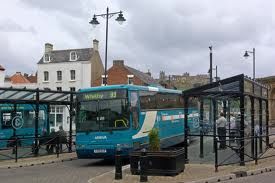
Trying to cut down on CO2 emissions, save money and keep the mileage down on our car I am trying to travel as much as I can by public transport and more often than not this is by train. Most days here at the convent, having risen early to write for several hours, I have taken a late lunch and then go for a walk. Several days I have walked down the hill and alongside the river from Sleights, through Ruswarp and onto Whitby, picked up a bit of shopping, occasionally reading a newspaper whilst enjoying a latte in a delightful, out of the way, “locals” café before often catching the bus back to Aisalby, from where I walk down to the convent. Overhearing conversations in cafes and on buses is a fabulous pastime. Enlightening, occasionally disturbing, often amusing and every now and again informative.

bus

As I look with some disbelief at the cost of my bus fare, for the four mile trip I can nevertheless, as the Bible says, rejoice with those who rejoice; that is with those of pensionable age who are enjoying all the benefits of a free bus pass. It is a wonderful thing, (not sure how long it will last and don’t hold out much optimism that it will still be around when I retire) but it provides far more than just access for elderly people to travel from their homes to shops and other vital services. It keeps or opens up opportunities to get out, travel, go places, do things and meet people. I got chatting at the bus stop with three elderly women who had come to Whitby from Teesside. An hours ride over the North Yorkshire Moors, half an hour pottering round Boyes Store, (a shop that slightly resembles what Woolworths used to be ~ before it went bust!), sum total of their purchases, a packet of curtain hooks and a halogen bulb, they had then walked along the harbour side, had a cup of coffee and a teacake. “It’s lovely, you should go pet, (must be a Geordie), it’s only £2.99 and if you don’t like coffee you can have tea and you choose what jam you want on your teacake”. I had not asked for any of this information, I’d only made a tentative enquiry as to whether I was at the right bus stop but I am smiling and want to laugh, not to mock but just out of joy at sharing such an ‘ordinary moment’ with three really canny ladies who were clearly enjoying their few hours excursion which had taken them from what I remember of Cargo Fleet, is not the prettiest place to live. In the ensuing few minutes I learned that these women spend at least two days, most weeks, travelling around to places throughout the North of England but Whitby as their favourite, because, “it’s dead handy, no changes, and if you want fish and chips, there’s no better place than Hadleys”, (well, actually there is, it’s called the Magpie or the Quayside but I didn’t want to be contentious or interrupt the flow of conversation that was definitely one directional and these women, clearly knew a bargain when they saw it and would no doubt have paid less for their fish and chips than you would pay at the Magpie and who am I to question either their culinary taste or financial acumen?!). They told me that they’d been to Durham last week, “ lovely place but dead hilly, that cobbled street up to the cathedral. ‘I love the cathedral me’, said one of the women, ‘ Have you ever been to Durham love?’ With my first real opportunity to contribute to any of the discussion, I replied that I had and in fact I had come from Durham to Whitby last week and with that I had to bid them farewell as I made my way down the bus as I was nearing my stop. Isn’t it wonderful (well, sometimes wonderful) how elderly people, slightly hard of hearing, speak loudly? There thoughts about me and their conjecturing as to who I might be and what I was doing remain a secret, I mean it’s not as if they wanted to broadcast it to the world! but I have to say that it was complimentary and caused me to chuckle all the way down the hill to the convent.   God bless bus passes and all who use them!

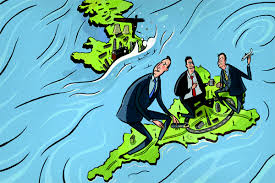
Had it not been for Lord Beeching, whose report to the Government in the 1960’s led to the closure of thousands of miles of rail lines, I might have been able to travel all the way to and from my home in the Cheviot hills of Northumberland. You go to other parts of Europe and see integrated transport systems, running like clockwork, appreciated by the public and you think why did it all go so wrong for us in Britain? Of course there is now investment going into improving the railways, or rather the railway line that the present government seems determined to push through, HR2, despite the astronomic costs. This is of course the railway line that will create faster links to London and the south-east. The propaganda says it will open up access to the North. Try telling anybody on the East Coast, North East or in fact any other region in Britain other than London, Birmingham or possibly Manchester that they’re going to benefit from this line and it’s a bit of an expensive, sick joke. Having travelled to the South West of England recently, now in complete disarray as a result of floods, landslides, causing weeks if not months of delay, there is no parity between what is being proposed for a particular route and the rest of the rail network. It seems to me that the only area that will gain will be London and the south-east. Now I have nothing against London and the south-east and I enjoy travelling through, visiting there and staying in our amazing capital city but I am increasingly feeling as I travel the length and breadth of Britain that we live in a two nation state; no longer north and south but London, the South East and everywhere else. In and around the capital there is an economic boom, there are jobs and house prices are rising. I read last week of someone who earned more from renting out two floors in their modest terraced house in North West London than they earn in a year’s salary. Our own lovely house in Wooler would be valued four or five times more what it is here in Northumberland if it was in the Home Counties.

north south cash

What worries me about the disproportionate growth of the economy in London and the south-east is the inequality that it creates with the rest of the country. When a banker in the city of London can earn over £40,000 in bonuses in one week and I live in an area where most people earn less than £20,000 in a year, there is something seriously adrift in how we value people and run the country.

north south cartoon

I am also troubled that political and economic policies are being made, in the main, by people whose lives are almost exclusively shaped by wealth and the values that emanate from the city of London. I have this unnerving feeling that for many people in such positions of responsibility and power, that they have little if any understanding of what life is really like for the vast majority of people. It really concerns me that our politicians, particularly those on the frontbench, those who are government ministers, determining and driving through policies and bills that affect the rest of Britain, are nearly all incredibly wealthy, many of them millionaires. In the same way I am disturbed by the emergence of career politicians, of all parties, many of them who come from independent schools, who go to Oxford and do PPE, get jobs as research assistants or political advisers and quickly work their way through the ranks and take the opportunity when it comes to become MPs with very little experience of life outside of the cocoon of politics and an elitist culture that is narrow in the extreme. How on earth can they be expected to be representatives of the “common people”? As there is an understandable call for women only shortlists in relation to people candidating to become MPs, I wonder if there is a place also for having some ordinary folks from other backgrounds. One or two people who have done something other than being a career politician? Folks who bring wisdom and experience from other walks of life and work.

I am sickened by how our democracy and government now resembles a PR company, employing marketing practices, delivering soundbites and spinning stories, (inevitably a part of politics but taken to new heights in the era of Peter Mandelson and Tony Blair). Where energy and resources are now deployed in electioneering in those key marginal seats that will determine the outcome of the next general election, instead of ruling on behalf of all the people, throughout Britain. The carefully orchestrated dropping in of the Prime Minister to flooded Somerset last week, carefully timed in order to make the 6 o’clock Main News just about sums up the lack of integrity and contributed to my loss of respect for so many of our present politicians. Now they are all at it, all parties, as the floods have hit the Home Counties. As the River Thames burst its banks, and water levels rise and  saturate, political leaders are donning their Burberry coats or Barbour jackets and putting on their new Hunter or Joules wellies. They have to be seen as heroes in a crisis; remember that there’s an election next year and there are votes to be had among floating voters!

Now that the floods have hit the Home Counties, politicians have really started to pull out the stops and get things moving. “Money is no object” says our Prime Minister. So where was the money for flood stricken communities in the North when they were hit a couple of years ago, where homes, workplaces and livelihoods were devastated without any government intervention, compensation or financial support? No, we are just in the forgotten North, that place beyond Watford Gap, where according to Lord Howell, the Chancellor’s father in law and former Energy Secretary under Margaret Thatcher fracking should be carried out. Last year in the House of Lords, he described the North East of England as an ‘unhabituated and desolate place’. He went onto to say, “I mean there obviously are, in beautiful natural areas, worries about not just the drilling and the fracking, which I think are exaggerated, but about the trucks, and the delivery, and the roads, and the disturbance, and those are justified worries…. but there are large and uninhabited and desolate areas, certainly in the North East where there’s plenty of room for fracking”. I can think of a word that I would be tempted to say in response to his suggestion that rhymes with frack but wont! But I am so frigging angry that we have such people advising and ruling our country, blind to the realities that most ordinary people feel and insensitive in the extreme.
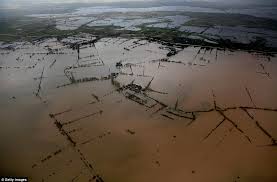
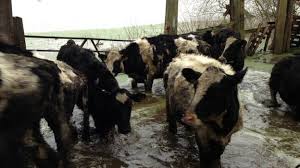
I do hope there is money for the devastated rural communities, the farms, land and livestock that is struggling to survive. Some of the truly heroic stories do not belong to politicians but to the support given by caring, concerned and supportive farmers not directly affected by the crisis. Like the story of the farmer from Barnsley, yes Barnsley in Yorkshire, who drove for 15 hours with his tractor pulling a trailer load of silage to Somerset to a farmer unable to feed their cattle. The impact of the flooding upon land where crops are either ruined or contaminated by the raw sewage that is strewn across hundreds of miles. Livestock, thousands of which have died or who will in due course contract pneumonia, mastitis and TB as a result of the flooding, damp conditions and the stress of being evacuated from their pastures. New born lambs, safely delivered in lambing sheds, face a very uncertain future as they are unable to be put out to pasture, which will lead to health problems and potential disease. Thank God there have been few fatalities to humans but the catastrophic loss of wildlife is something that is almost too hard to contemplate.

flooded farms      cattle water

And whilst recognising the terrible conditions and plight faced now by several thousand people as a result of the flooding, I want to put a good word in for those who work for the Environment Agency. In a blame culture, where it appears so much easier to point the finger at other people, accept that there will always be lessons to be learnt from any situation, nearly always room for improvement, I have felt really sorry for those men and women from the agency. They are working night and day, in horrendous conditions, some inevitably taking risks to their own lives in order to help alleviate suffering of others.

It is horrendous for all those who suffer from flooding; its impact on their lives, health, home, work and the environment are deeply troubling. The hardships, suffering and impact on the economy and environment cannot be underestimated. There are immense challenges in what is a very real crisis for some parts of Britain given the atrocious weather conditions that continue unabated. But for politicians to be leaping around with film crews at their heels, grabbing every opportunity to “reassure”, make promises and spin stories is sickening and in my mind irresponsible. This is ‘disaster politics’, where political leaders have not only to be doing something but seen to be doing something.

There are other things happening in society and the world that also matter and which they should be giving their time and attention to. David Cameron has cancelled an important trip to the Middle East because of the floods. Syria and the crisis there has disappeared off the news headlines. Heralded the other week by the government that we were now willing to receive Syrian refugees, (actually a miserly 500 and only after much pressure from aid agencies) I learnt this week, unheralded by politicians, that the Home Office is using a clause in the regulations to return asylum seekers back to the first country they entered in Europe. Unbelievably and under the radar of most news editors, we have returned some of these Syrian refugees back to countries like Bulgaria and Hungary. We are the first to condemn the EU for the wave (barely a trickle if truth be known) of Bulgarians that are now allowed to ‘flood’ into Britain but we are happy to send them Syrian refugees. Bulgaria, economically among the poorest in Europe, where there are people dying of hunger and hypothermia, has taken more Syrian refuges than we have in Britain!  God help us!

syrian crisis 01

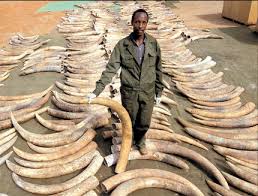
The Prime Minister was to have welcomed and given a keynote speech as Britain hosts the largest ever summit on illegal wildlife trading. Over fifty heads of government gathered this week in London to address the serious issue of the illegal trading of such things as ivory which threatens the extinction of elephants and rhinos. Over a hundred elephants will be killed today and every day in Africa, their tusks ripped off to satisfy the world’s desire for ivory. 50,000 elephants are being slaughtered each year, their tusks being illegally sold to markets across the world, including Britain but principally China. Rhinos are also under threat of extinction, where, like the elephants tusks, rhino horns in China are used in Chinese medicine, a practice that bears no scientific evidence whatsoever that it cures any illness or disease. I have not uploaded the horrific images of elephants and rhinos that have been slaughtered for such an illegal trade but your mind’s eye will be sufficient to get the picture.  The growing myth of Chinese medical cures and the desire for ivory luxury goods is a death sentence to the rhino and elephant.

ivory   elephant

The summit gathering at Lancaster House London was an important opportunity to address this serious and illegal trading issue and we should have been represented at the highest level by the Prime Minister. Homes, flooded in Britain, (some no doubt with ivory ornaments and furnishings in them), will recover; extinct elephants and rhinos will not.

And it’s not just about illegal trading but an opportunity to address the issues of consumerism that drives the demand for such things, end corruption that is endemic in some nations and how we can help developing countries to develop alternative, sustainable economies, with a global market that needs to operate on fair, equitable principles and trade justice.

The train is pulling into Middlesbrough station….

Posted in Uncategorized | 3 Comments

Reflections from a Convent

I’m back again at St. Oswald’s, Whitby, not on retreat but here for ten days to do some writing.

 st oswalds

I love the place and the Sisters here.

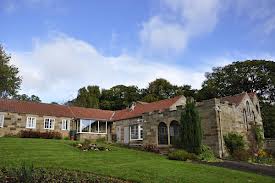
Self-catering in a little cottage in the grounds overlooking the Esk Valley, cut off from internet facilities and with a poor mobile signal creates the right environment for prayer, reflection and writing.  As with last year at the IBTS Seminary in Prague, I leave my cottage and walk up the hill to share in the daily offices.

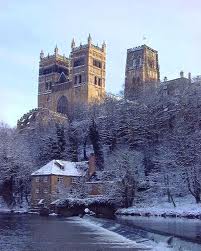
En route I stayed overnight at Cranmer Hall, Durham before giving a lecture on leadership the following morning. The college is just behind Durham Cathedral, the shrine of St Cuthbert and is a focus of pilgrimage and spirituality in North East England. It’s a remarkable sacred space set in the wonderful natural landscape on top of a hill overlooking the city. I then travelled by train to Whitby, another famous Celtic heritage site and I am conscious of the Celtic Saints, men and women whose influence profoundly shaped the spirituality of Northumbria.

durham cathedral

I love the rhythm of the monastic day; its disciplines provide balance and a healthy pattern that I personally find very life-giving.  I love the spirituality of the Order here, that rooted in the traditional vows of poverty, chastity and obedience, with a particular commitment to prayer and hospitality, is free from the legalism and religiosity that sadly prevails in some communities and churches.  I am welcomed with hugs, laughter and afternoon tea and soon after quickly settle into the seclusion that my cottage affords.  Its strange really, that whilst missing home and Shirley my wife, there is something very significant for me in setting time aside and coming away to write.  In this context words flow and the stillness triggers much creativity and a myriad of thoughts that I’m able to put to “paper”.  I sense something of an evolving and changing role for me within the Community, still wandering for the love of Christ sharing and telling the Community’s story wherever the Father leads but with a greater desire to write and resource the Community, to help equip and release both present and future generations in their calling to Availability and Vulnerability.  I am currently working on a book on spiritual formation, which I hope and pray will help people to embrace the Great Commandment, to love the Lord your God with all your heart, soul, mind and strength and love your neighbour as you would love yourself; something I hope will encourage believers but also, like the Community, connect with others seeking God, who are exploring issues of life and faith and searching for meaning and purpose in their lives.  I am mindful of the phrase “one drop of ink can make a thousand think” and I hope my small contribution (well it’s not that small because I am currently at 62,000 words!) will serve to encourage and help people in their life and faith.  I am so glad that I resisted, what was at the time, the opportunity and temptation to write earlier in my life and ministry.  Not only would I have written out of more enthusiasm than experience but probably for the wrong reasons, i.e. opportunism and self-promotion.  Now I feel a bit like a young grandfather, (something that I am, as one in his 50’s with five young grandchildren), a leader within the Community who having been around from its beginnings can share insights and reflections, wisdom and hopefully inspiration, for the emerging generations for whom the future holds much promise amidst many challenges.  I am mindful of the words of C.S. Lewis who once said; “Think of me not as an expert but as a fellow patient in the same hospital, who having been admitted a little earlier can pass on some information”.

I was just about to preside at the Eucharist here at St. Oswald’s with the lectionary readings, collect and post Communion prayer on my Iphone when I noticed a text come through which informed me that my former church had literally just voted to call a woman to join the leadership team.  As I welcomed the nuns to the Eucharist, I shared with them and we rejoiced at this joyous news.

st oswalds chapel

Celebrating at St. Oswald’s in a chapel whose windows tell the story of the Celtic Saints, it did not seem inappropriate.  In the 6th century Hilda, a nun, was persuaded by Aidan, then Bishop of Lindisfarne to stay in Northumbria rather than travel to France.   Founding a small community on the banks of the River Tyne, she then moved to Hartlepool and later here to Whitby where she hosted the famous Synod in 664 where the decision was made to follow the Roman way of worship rather than the Celtic way.  The monastery was also the home of Caedmon, the cowherd, storyteller and arguably the father of English poetry.  Under her leadership, the double monastery here at Whitby trained many in the monastic way, several of whom became bishops.  In a period of history that was characterised by violence and conflict, she created peace.  In a period when few were rich and many were poor, she treated all with equal respect.  In a time when many did not know Christ or his good news, she trained many to share the gospel. St. Hilda’s Priory is now the home of the Order of the Holy Paraclete, an Order of women seeking to follow in the footsteps of Hilda.

I think we will look back in history not only herald the lives of women who shaped the world for good but also look back in horror that the voices and contribution of women were not heard or were disregarded or suppressed.

At the weekend I was speaking to a group, mostly of men and during our time together, one of them, a highly successful businessman, (if you measure success by financial wealth) questioned the validity of the communities like our own and particularly cloistered communities that lived in monasteries and convents. I spoke about the value and efficacy of prayer, hospitality, reflection, contemplation in a world of action and its fruits of wisdom. The creating of space and time to be, to think and feel, observe and pray. I cited some examples from the world of politics, economics, foreign policy, referencing particularly some of the attitudes and actions of bankers and other financial institutions, which all might have served the world better with some elements of contemplation and applied wisdom. Little did I know at the time, that I was speaking to a former director of Northern Rock. I rest my case!

I was reminded the other day of the story I first heard years ago when Shirley and I were studying Bible college. Helen Ewing was a young woman who came to faith in Christ in Scotland. She had a longing and felt the call to prepare for missionary work in Eastern Europe and learnt Russian. She was a prolific writer although she never wrote a book, composed a hymn or song, was no great preacher and never travelled more than 200 miles from her home in Glasgow. She died sadly the age of 22 and there followed an overwhelming wave of grief that touched thousands of people. In a period of seven years, this young woman had taken to heart those who had responded to Jesus command to, Go into all the world and make disciples, missionaries who shared the good news of the Christian faith with others. Helen arose early every morning and prayed for them and in the evenings would write to many of them. Her diaries revealed over 300 different people for whom she was praying. She never left Scotland but her life and prayers touched so many people and through them many thousands of people were reached with the good news of the faith that she lived and died by.

I think of the nuns here, many who have travelled, several spending lengthy periods in Africa but now, the vast majority of them, “confined” to the convent here in Whitby. Each day they gather formally to pray and to intercede for the world, they carry in their hearts and prayers so many people. They welcome guests and strangers, seekers and pilgrims, increasingly people searching for faith but disillusioned, disheartened or bruised by their experience of church or others who with existing patterns and practices of church life have no connection with their spiritual journey but who find in places such as this, a welcome and environment that is safe and conducive to discovering and encountering God.

I am mindful also of a Companion in our Community whom I was privileged to spend some time with recently when I was down in the south-west. I was at a ministers conference as a result of her suggesting I be invited to be their keynote speaker. We had met briefly before at Nether Springs and when I have been down to a Community Gathering or Group in Devon or Cornwall. One the joys and privileges of being in Community is holding people before God each day from our Prayer Guide. My travels afford me lots of opportunities to meet with Companions and Friends “on their own patch” and it was really good to have shared with her, learned more about her remarkable life story and faith journey, which included being widowed in her 30’s with five children and her very reluctant response to God’s call to church ministry. She is now in Cornwall, carrying a passionate heart for the renewal of the faith that was brought by the Celtic saints. She didn’t tell me this but one of the other leaders told me that she had gone to a place where others simply wouldn’t go. Creative, eccentric, with a servant heart she is enthusiastic with an optimism that would even exceed my buoyancy and in her Availability and Vulnerability she epitomizes the vocation of what it means to be a Companion. She, like the vast majority in our Community experiences much more of the alone than the together, yet, as she describes in her own words, the Community is her lifeline. Our covenant and Rule of Life informing and shaping her life and ministry. My prayer is that in our sharing of the Community’s daily offices, telling some of the stories of the Celtic saints and helping people to see how our spirituality connects with life today in an emerging post-Christendom Western world.

In the turbulence of change both within the church and wider society, with many challenges, we may come to see that in the lives of those whom society often ridicules or regards as irrelevant, that paradoxically, it is these women and men, who hold the things of real worth and significance together and act as prophetic signs, pointing us back to God and the ways of his kingdom.

Posted in Uncategorized | Comments Off on Reflections from a Convent

Friends of the Earth?

It’s a cold, wet and pretty miserable day here in Devon where I am seeing first-hand the damage caused by months of rain and the recent gales that have battered the South West of Britain.

images-1

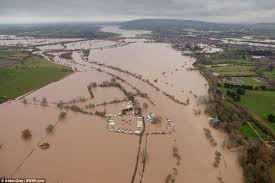
Leaving the cold but relatively calm North East yesterday, the further south I travelled, looking out of the windows on the train, I saw increasing evidence of saturated land and flooding with rivers and groundwater levels unable to cope with the incessant rain this winter. I am less than 50 miles from the Somerset levels where the extreme weather has caused insurmountable damage to land and livestock and caused much stress and hardship for people living in the area. My knowledge of geography and weather systems is limited but I am left with a slightly uneasy thought; that if we build on floodplains we are likely at some point to encounter floods. Several years ago we experienced flooding in Northumberland and it was devastating for the farms and small hamlets on Milfield Plain, just north of Wooler where we live but it was a plain, a floodplain and therefore to be expected.

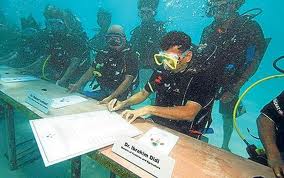
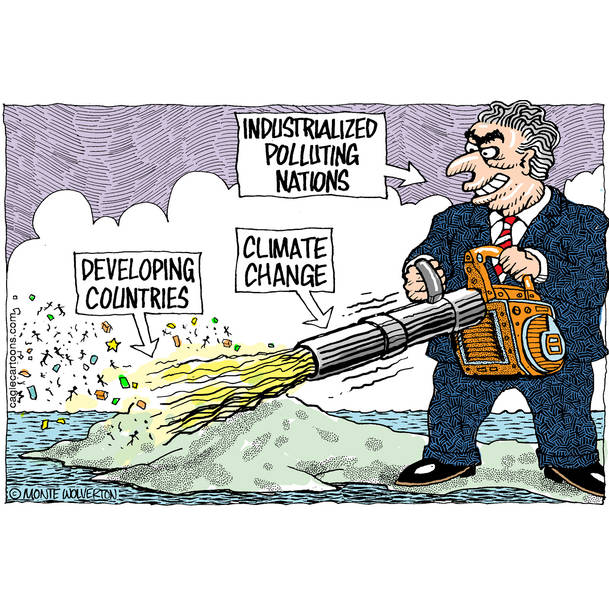
I sympathise for anyone who is a victim of flooding and not just for the threat to livelihoods and the inconvenience for people in Britain but more seriously, on a global scale. I’m thinking about those who have little choice as to where they live. People who because of poverty and injustice have little alternative or opportunity to live anywhere else; people whose lives are in jeopardy because of global warming and the rise in sea levels and the inevitable floods. These victims of climate change will increasingly become the new face of the poor.

images-2       images-3

Both at UN talks and most recently at the World Council of Churches in Korea, delegates from Asia, Africa and South America have pleaded with the world’s economically dominant nations, principally USA, China, India and some of the European countries to take seriously the threat of climate change. A church leader from the Maldives, a place that draws people who have the means to pay for expensive honeymoons and luxurious holidays, reminded delegates at the World Council of Churches meeting that within the next forty years his homeland, the Maldives, along with other places like Fiji and the Solomon Islands would mostly disappear as sea levels rise. Climate change impacts lives, lands, food, water and human health. It will bring about the forced migration on an unprecedented scale. Scientists are predicting that global warming will force up to 150 million “climate refugees” who will have to move to other countries in the next 40 years, with a further 500 million, nearly 10% of the world’s population at risk from replacement as a result of climate change. This is serious stuff!

images-4

Rising temperatures and shifting weather patterns are changing the world in which we live. It’s impacting the areas where people, animals, birds, insects and plants live. It’s affecting the timing of life-cycle events, such as when buds appear and blossom, leaf drop from trees, pollination, reproduction and bird migration. The melting of the Arctic ice cap, coastal erosion, temperature changes, ocean acidification, marine ecosystems, the rise in sea levels are all changing and pose enormous threats and challenges to the world as we know it.

images-5

I was surprised and shaken from my relative complacency when I read recently about Europe’s seas which are changing at an unprecedented rate and much higher than climate scientists had anticipated. Seawater temperatures have been rising 10 times faster than average over the past 25 years and wind speeds have also been increasing at unprecedented levels. The combination of these rising sea levels and the stronger winds and gales has resulted in the loss of 15% of Europe’s coasts. This is leading to changes in the marine food chain as marine life migrates to the Atlantic from the Pacific, causing significant impacts on marine life. Some strains of bacteria are becoming more prevalent and pose potential threats to human health. The report I read highlighted the increase, for example in cholera in the North Sea over the past 30 years, a disturbing finding.

Of course as with a global economic recession it is always the poor and the most vulnerable who are the greatest victims. Climate change impacts such people far more than those of us who live in the West. It grieves me that one of the most pressing issues facing the world today is certainly not at the top of political agendas or public debate. It’s much easier to harangue the Environment Minister for complacency and a failure to act, thereby preventing or minimising the impact of floods in Britain, than to have a properly informed debate on the issue of climate change. Short termism prevails in economics, politics, planning and land use. Talking with some of the guests at the hotel and conference centre where I’m staying, who live in Somerset I learnt that for the last 5 years people have been saying that the rivers are silting up and need to be dredged. It seems to me fairly obvious, but if you help and make it possible for property developers to build new homes, which increases the housing population in an area, that inevitably increases the demand on both water supplies and sewage disposal, you have to give some support and help to river systems that are suddenly expected to cope with such unrealistic demands, accentuated when it rains. Bad land management practice, which leaves crops and root systems in the ground for much longer, only help to harden the terrain, which in turn is unable to soak up rainwater. It seems to me that the individualism and consumerism of contemporary Western culture negates the necessity for some sound collaborative and collective thinking, along with wise and reflective consideration that leads to good practice, which addresses issues such as climate change, housing policies, land management and farming practices.

images

One of the foundational questions at the heart of our Community’s life is How then shall we live? This is not a religious question confined to a cosy midweek Bible study group but a serious life and faith issue that asks the question in the midst of climate change, political rhetoric, economic forecasts, foreign policies, the debate on Scottish independence, welfare reforms, etc.

President Mohammad Nasheed of the Maldives, who is continually bombarding the UN with the reality of the impending loss of most of his country due to rising sea levels, says that he does not want to, “trade paradise for a climate refugee camp”. He warned rich countries taking part in UN climate talks recently, “not to be so stupid” in neglecting the consequences of global warming for the world. Endlessly polluting the world to serve our consuming, consumerist ways of living and working will continue to melt the polar ice caps and raise sea levels.

In a wonderfully prophetic act, in the autumn of last year, the president held a Cabinet meeting underwater to draw attention to the plight of his country.

images-8

The gravity of climate change and the consequences it is already  reeking out upon the world, together with the rise of sea levels, the melting of the glaziers and the polar ice, increasing strength and frequency of floods, tropical storms and droughts poses some serious threats to civilisation. Equally, it raises serious questions about how we live. There is a growing consensus in the scientific community, largely ignored by politicians and industrialists, on the link between human causes and climate change.

101807976-climate-change-victims

The Bible has much to say about our relationship with the world and our responsibility to live as God intends. For example, the psalmist declares; The earth is the Lord’s, and everything in it, the world and all who live in it; for he founded it on the seas and established it on the water, Psalm 24.

Unknown

Or think of the  prophet Isaiah who commanded, cease to do evil and learn to do right; Pursue justice and champion the oppressed. Give the orphan his rights, plead the widow’s case”. Isaiah 1:16

Unknown-2

I have never understood why Christians have not raised the priority of the environment as a key issue which relates to the kingdom of God and his will. Surely, the friends of heaven, should be the leading movement as Friends of the Earth?

Posted in Uncategorized | 2 Comments